
Renditanzia presents itself as an online investment platform. Its regulatory status, however, raises serious concerns. On November 5, 2026, Italy’s financial markets regulator, CONSOB, ordered the company to stop offering crypto-asset services to the Italian public without authorization. The order named ten related websites, including renditanziait.com.
That official action deserves more weight than promotional claims or online reviews. This article looks at what’s known about Renditanzia, what customers might encounter, and what remains unclear. It doesn’t treat advertised returns as proof of investment performance.
What Renditanzia appears to offer
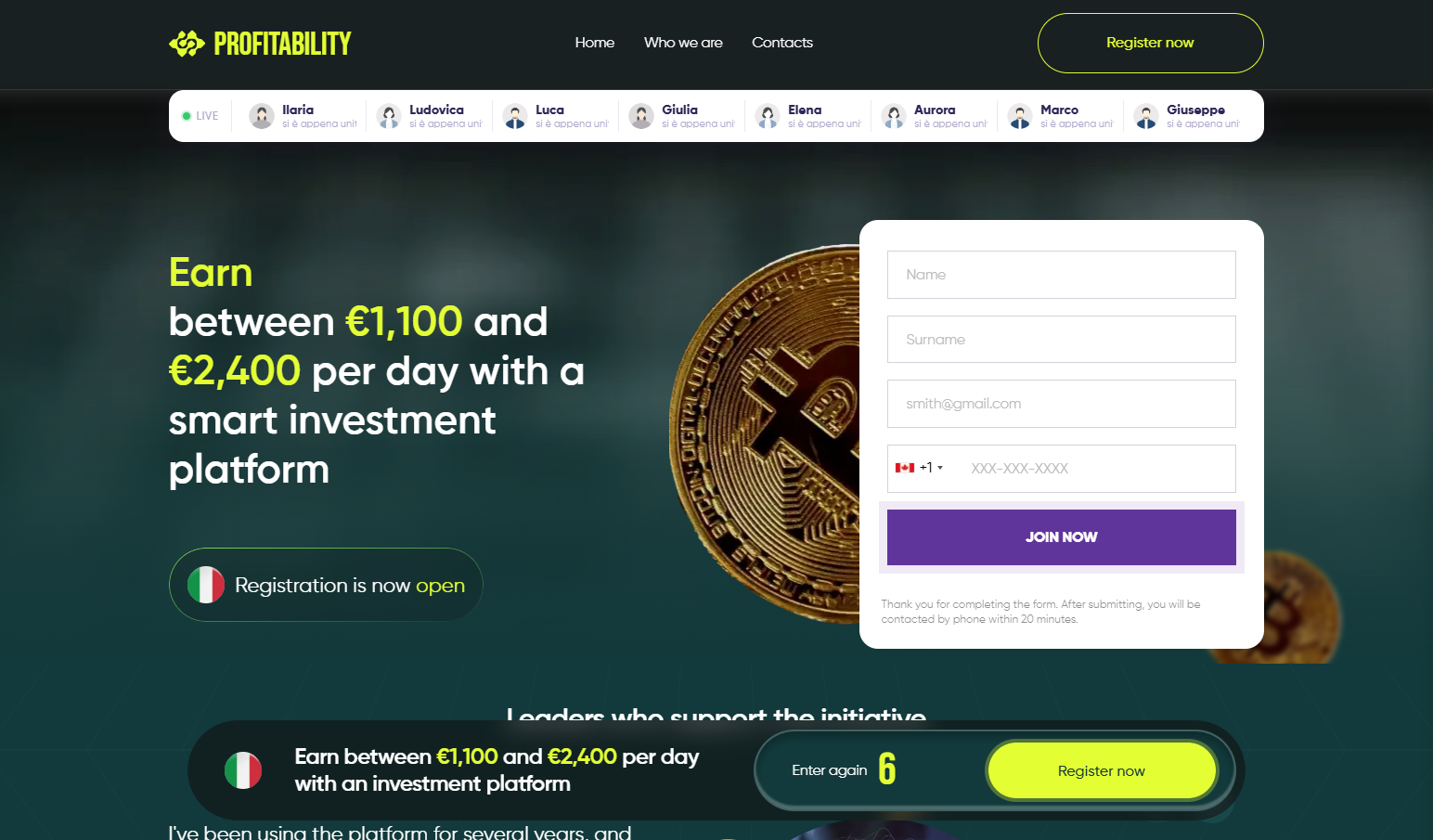
CONSOB listed renditanziait.com alongside nine similarly named websites: renditanzia-it.com, renditanziaai.com, renditanziaaibot.com, renditanziabot.com, renditanzia.xyz, renditanziaofficial.com, renditanzia.online, renditanzia.sbs, and renditanzia.it. The regulator’s order concerned crypto-asset services offered to the Italian public without authorization. Several related domains can make it harder to identify the official site and the company behind it. A person might find one address in an advertisement, sign up through another, then receive messages from a third. The domain names don’t show exactly how each site operated or whether every visitor saw the same content. Still, a regulator’s decision to name a group of related sites makes it important to ask who runs them and which company accepts responsibility. A separate report about Renditanzia’s landing page described an Italian-language signup form, projected daily earnings, and an endorsement attributed to a government minister. CONSOB’s announcement did not confirm those details. Treat them as claims from that report, not established facts. If the site makes claims like these, look for proof elsewhere. Check whether the platform names a legal company. Confirm its authorization through the relevant regulator. Verify any endorsement with the person or organization named.What can you learn about the platform?
A thorough platform review would examine how customers open and fund accounts, which assets they can trade, and how the company handles fees and withdrawals. It would also check the operator’s identity, terms, customer support, and regulatory permissions. The available information doesn’t support a full product review of Renditanzia. CONSOB’s announcement says the regulator ordered the sites to stop offering crypto-asset services to the Italian public without authorization. It doesn’t describe the platform’s interface, trading technology, fees, custody arrangements, or customer support. It also doesn’t verify any advertised returns. That gap matters. A polished website or dashboard doesn’t prove that a platform places real trades, protects customer assets, or processes withdrawals. A displayed balance is just a number unless the company can show where the assets sit and provide reliable transaction records. The same applies to claims about automated or AI-powered trading. Those descriptions don’t prove that a strategy works, earns money, or has passed independent testing. The most important documented fact isn’t a trading feature or account type. It’s CONSOB’s finding that Renditanzia offered services to the Italian public without the required authorization. That finding raises serious questions about accountability and customer protections. The legal implications may vary by location and service, but the regulator’s action is a major warning sign.Customer experience: what’s known and what isn’t
Customers begin forming an impression before they open an account. They might find a platform through a search result, social media, an online ad, or a referral. They should ask a few basic questions: Who operates the service? Does the company explain its fees and risks? Can customers verify its credentials independently? A report on Renditanzia’s landing page described a signup form and a promised follow-up call. It also claimed the page didn’t clearly identify a company or provide an authorization number. CONSOB’s notice doesn’t confirm these observations, so treat them as claims from the report. Even so, customers should be able to identify the legal entity responsible for their account, communications, and assets. If a site hides that information or makes it hard to verify, customers have a basic accountability problem. Reliable information about what happens after signup appears limited. CONSOB’s order doesn’t list deposit methods or minimum balances. It doesn’t explain how customers place trades or whether they could withdraw funds. It also doesn’t describe individual customer experiences. Without stronger evidence, it would be misleading to claim that all customers had the same experience. Don’t fill those gaps with assumptions. A website may display projected gains, but that doesn’t prove customers received them. At the same time, the regulator’s notice doesn’t document every customer interaction. The careful conclusion is narrower: CONSOB identified an authorization issue, while many details about the platform remain unverified.Key warning signs
1. A direct regulatory action. CONSOB said Renditanzia’s listed domains offered crypto-asset services to the Italian public without authorization. The regulator ordered the activity to stop. This is the clearest and most serious documented warning sign. 2. A group of related domains. CONSOB named ten Renditanzia-related addresses in the same order. Similar websites can make it harder to identify the official platform and the company behind it. The order confirms the domain list but doesn’t explain how each site operated. 3. Promotional claims that need proof. A report described specific earnings claims and an endorsement attributed to a public figure. Don’t accept either at face value. Look for independent evidence of the returns and confirmation of the endorsement from the person or organization named. 4. Unclear accountability. Customers should be able to identify the company operating a platform and check its authorization with the relevant regulator. Missing or inconsistent company details make it difficult to know who is responsible. 5. Marketing that outpaces the evidence. A slick interface, testimonials, charts, and advertised returns can create a strong impression. They don’t replace regulatory authorization, clear fees, transparent custody arrangements, or independently verified trading records. The Federal Trade Commission also warns consumers about promises of high returns with little or no risk, as well as pressure to invest quickly.What Should You Do If You’ve Been Affected?
If you have interacted with Renditanzia, consider taking the following steps as soon as possible:- Stop sending any further funds
- Keep a record of all transactions and communications
- Carefully review your situation before taking any additional action